A rocket reaching orbit for the first time can change a company’s future. It does very little to change the global balance of power in the space industry.
The harder milestones are delivering 100 tonnes in a year, then 400, then 1,000 tons per year.
SpaceX Falcon 9 is several levels beyond competitors. A new rocket making a successful debut in 2027 would matter. It would still leave years of manufacturing, recovery, refurbishment and launch operations to prove.
The key number is actual payload delivered per year. A rocket’s advertised lifting capacity is only one input.
The arithmetic of becoming a major launch provider
Annual delivered mass is the sum of the payloads successfully placed into their intended orbits. For planning, a useful approximation is:
Annual delivered tonnes = launch attempts × mission success rate × average payload on successful flights.
The payload input must reflect real missions. A maximum rating for low Earth orbit cannot be applied unchanged to launches to higher orbits, different inclinations, or missions that reserve more fuel for recovery.
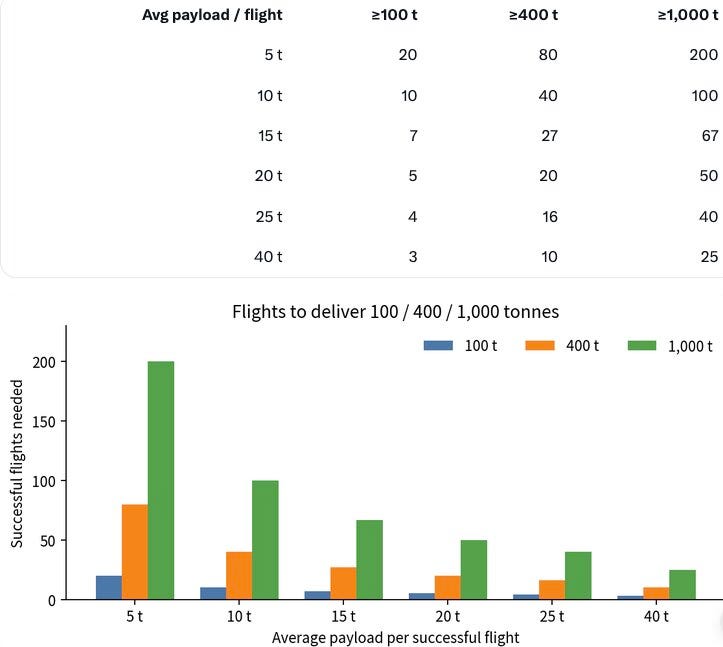
Here is what the throughput thresholds require before allowing for failures.