Update On Next Level Quantum Computing - Leader to Error Corrected - Megaquop and Gigaquop Roadmap

QuEra is a netural atom quantum computer leader. They were founded out of Harvard and MIT, ~200 staff and have $250 million of total funding so far. They are focused exclusively on neutral atoms as the path to fault-tolerant quantum computing (FTQC)
The $250M raise include investors like Google and NVIDIA. They were named a “Coolest Vendor in Quantum Computing” by Gartner. They use much lower power and space requirements vs. superconducting or photonic systems.
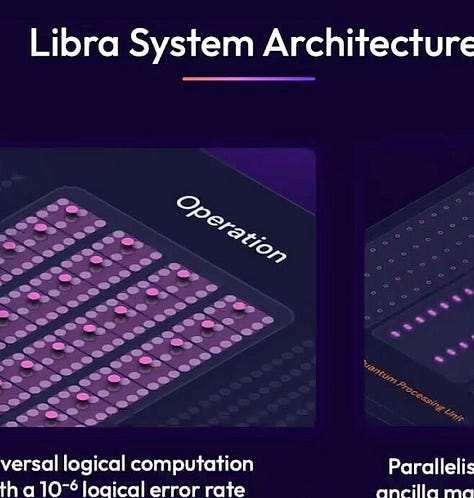
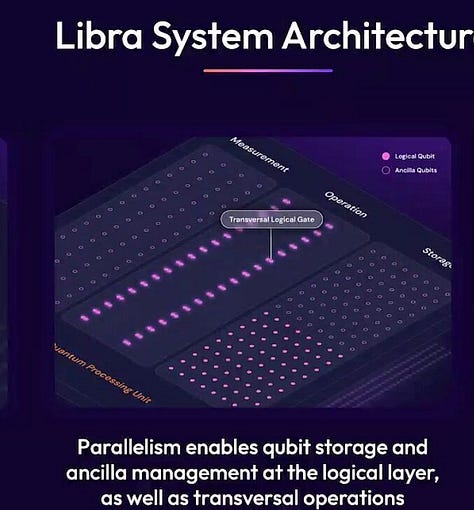
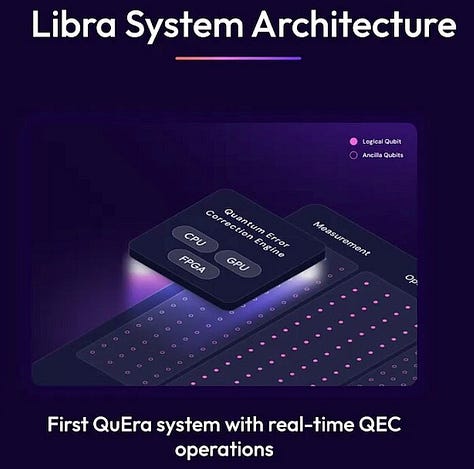
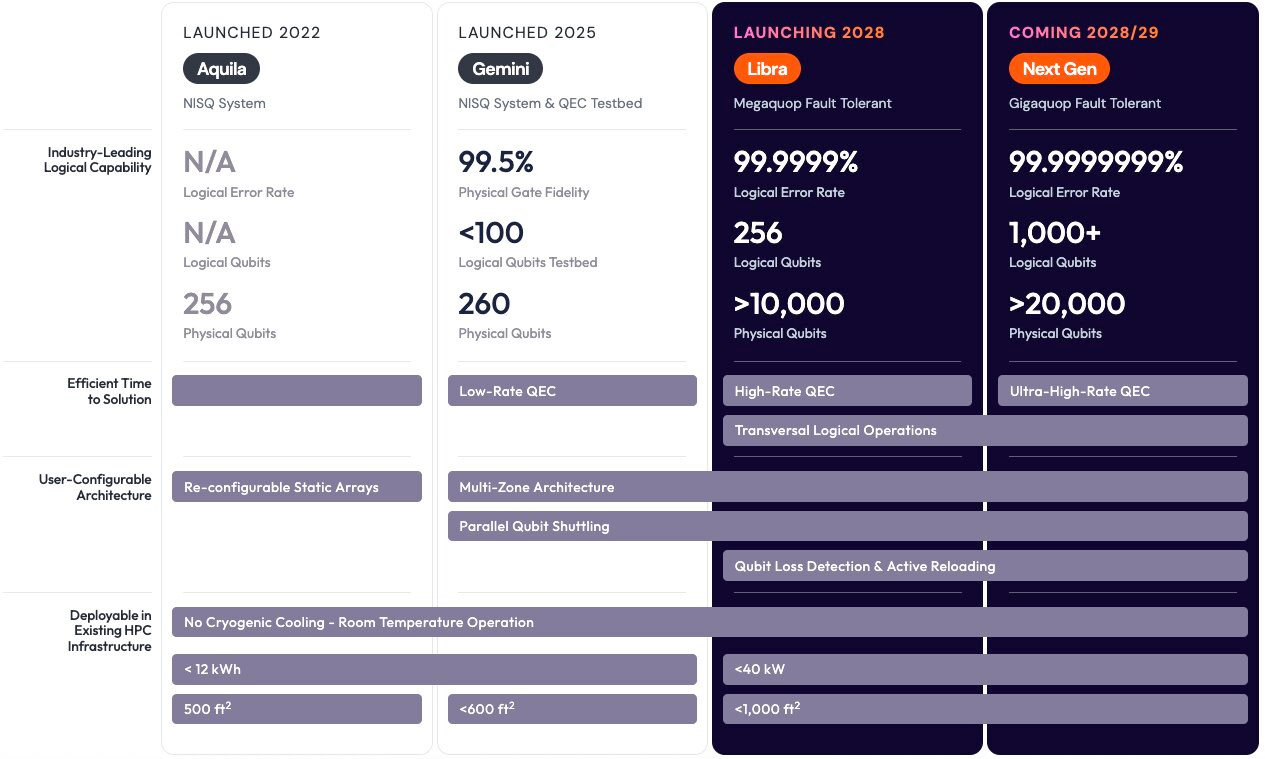
QuEra has outlined a clear, accelerated path from NISQ systems to early fault-tolerant quantum computing using neutral atoms.Megaquop Era (2028) – Libra System
Target: ~1 million reliable logical operations (hence “Megaquop”).
Timeline: Launching in 2028 on Amazon Braket (cloud-accessible).
Key Specs:
Hundreds of logical qubits
Logical error rate ~ 10⁻⁶ (99.9999% effective fidelity)
Significantly lower power and physical footprint than competing approaches
Purpose: First practical fault-tolerant system for early commercial and research use. It aims to deliver calculations that are genuinely beyond classical reach in targeted domains.
This marks QuEra’s transition from error-corrected testbeds (Gemini) to production-ready fault-tolerant hardware.Gigaquop Era (2028–2029) – Next-Gen System
Target: On the order of 1 billion reliable logical operations (roughly 1,000× more capability than Megaquop).
Timeline: Targeted for 2028–2029.
Projected Specs:
>1,000 logical qubits
Logical error rate ~ 10⁻⁹
>20,000 physical qubits in a single processing core
Purpose: A major leap toward broader quantum advantage.
Existing Products: Aquila and Gemini
Aquila: world’s first publicly available neutral atom quantum computer
Launched on Amazon Braket, November 2022
130 hours/week availability, 99%+ uptime
Enabled 60+ published papers across academia and industry
Analog operation mode: users arrange atoms spatially and define pulse sequences
Gemini: first gate-based, digital-mode neutral atom system
First on-prem deployment at ICED in Japan
Zoned architecture: qubits rearranged mid-computation, enabling any 20-qubit connectivity
Launching later this year as a QEC testnet for researchers to explore decoders, syndrome extraction, resource factories, and logical circuit optimization
Scientific Foundation for Fault Tolerance
Key published results underpinning the roadmap:
48 logical qubits with 250+ physical qubits; below-threshold error correction (Nature)
End-to-end FTQC demonstration: up to 96 logical qubits, 100x cycle rate improvement (Nature)
Correlated decoding across multiple logical qubits: ~1.5x logical error improvement, syndrome rounds reduced by factor of code distance (PRL)
QLDPC codes: 10x reduction in physical qubits vs. surface code at 3,000-qubit scale (Nature Physics)
Transversal fault tolerance gives 10-100x improvement in time-to-solution (Nature)
First logical magic state distillation on logical qubits, demonstrated on Gemini in Japan (Nature)
Hardware milestones:
Two-qubit gate fidelity: 99.77% (99.96% post-selecting for loss)
Average fidelity over large zones: 99.74%
Continuous atom reloading prototype commissioned: ~20,000 atoms/second, compatible with 20,000-physical-qubit machines