
The 1,500-Launch Question Isn’t About Rockets. It’s About Oxygen
By Brian Wang

Flight 13 just proved the hard part of reuse is nearly solved. The next wall SpaceX hits is heavy industry — and almost nobody is pricing it in.
Flight 13 came home. The ship flew a deliberately brutal, higher-dynamic-pressure reentry, survived the flip and landing burn, soft-splashed, and kept transmitting — with tile loss you could count on one hand in the best camera angles. Elon said they got “all the heat shield data we needed and then some.” The single biggest technical barrier to rapid Starship reuse just got a lot smaller.

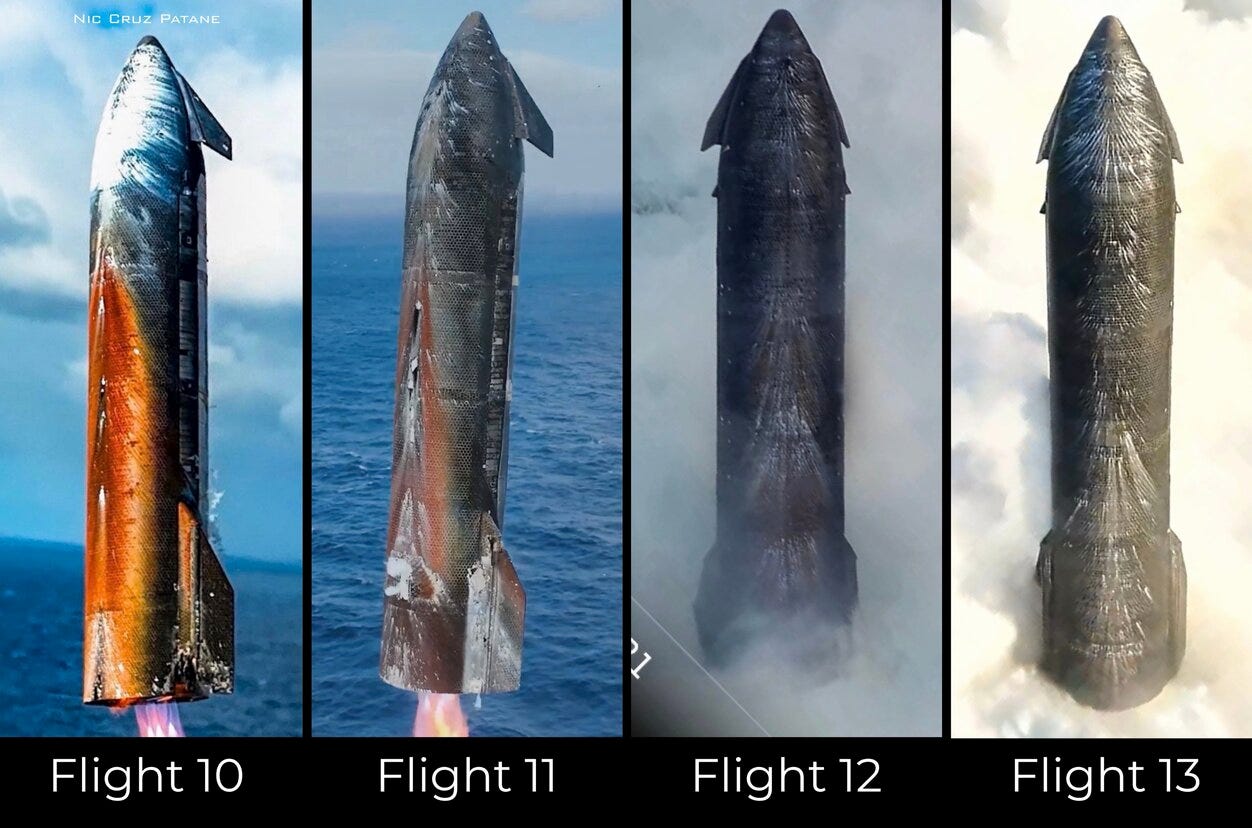
Which makes this the right moment to ask the question everyone is asking wrong.
SpaceX has said plainly that it intends to launch Starship thousands of times a year, and that this will require launching from many sites. Put a number on it — say 1,500 flights in 2028 — and the instinct is to treat it as a rocket-engineering problem. Can the vehicle be made reliable and reusable enough?
But reusability is the part SpaceX has now demonstrated in principle. The booster has been recovered three times and reused twice. The ship just proved it can take a punishing reentry and stay intact. The things that will actually decide whether 2028 looks like 1,500 flights or 150 aren’t aerodynamic. They’re industrial and bureaucratic. How much liquid oxygen you can make on site. How many towers you have. How fast a pad can cycle. And what the FAA has signed off on — today’s approved ceiling is roughly 145 flights.
Here is the argument, and why the constraint is not where most people are looking.
